Facial Recognition & Liveness Detection
AI-Powered Biometric Verification Tailored for MEA
Uqudo’s facial recognition and liveness detection technology delivers best-in-class biometric verification built specifically for Middle Eastern and African markets.
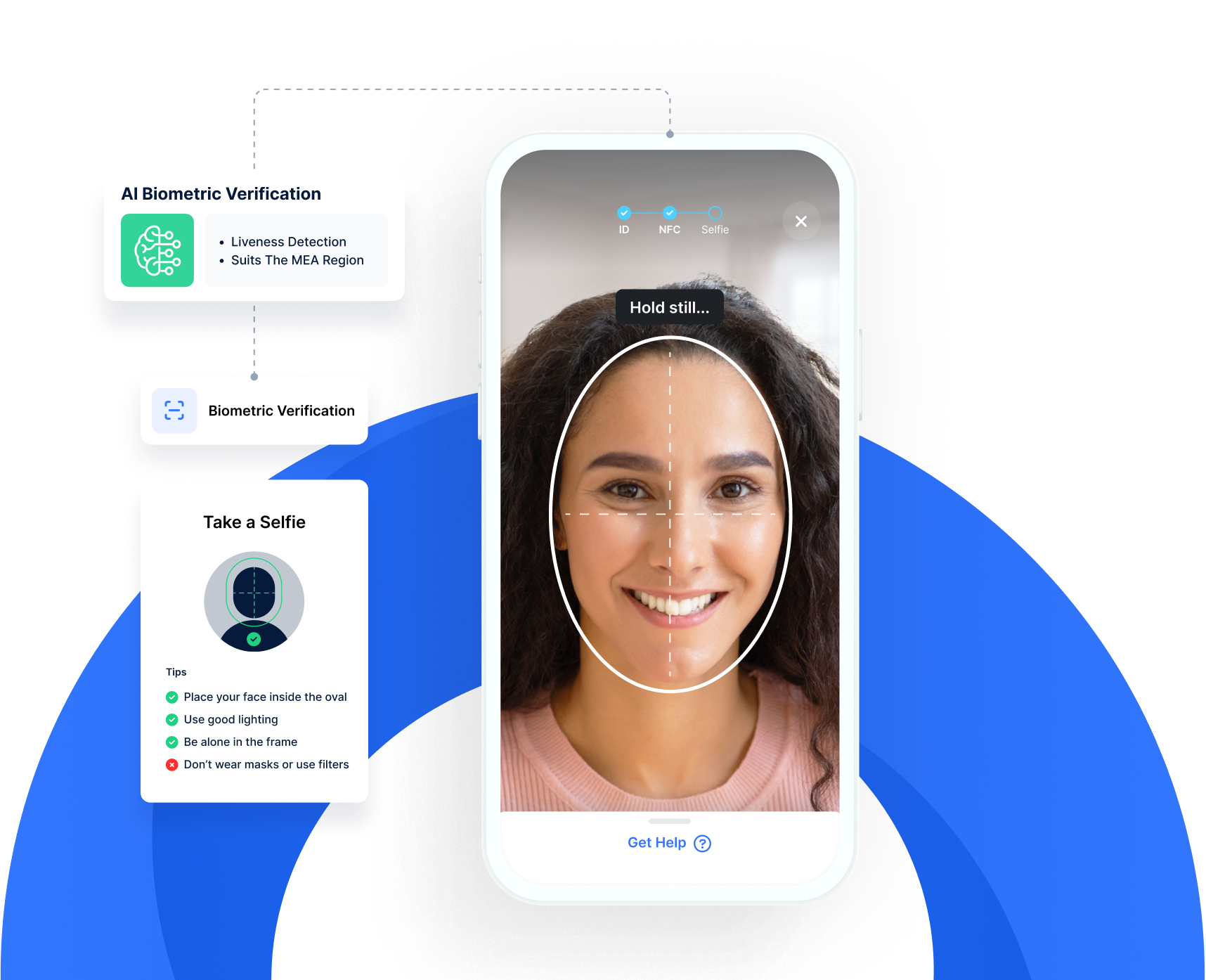









Speed
Face capture with quality assessment in less than 100ms on modern devices

Accuracy
Exceptional face matching precision with minimal false positives

Security
Multi-layered protection against the latest spoofing technologies

User Experience
Frictionless verification process with real-time feedback
Key Capabilities
Advanced Facial Recognition
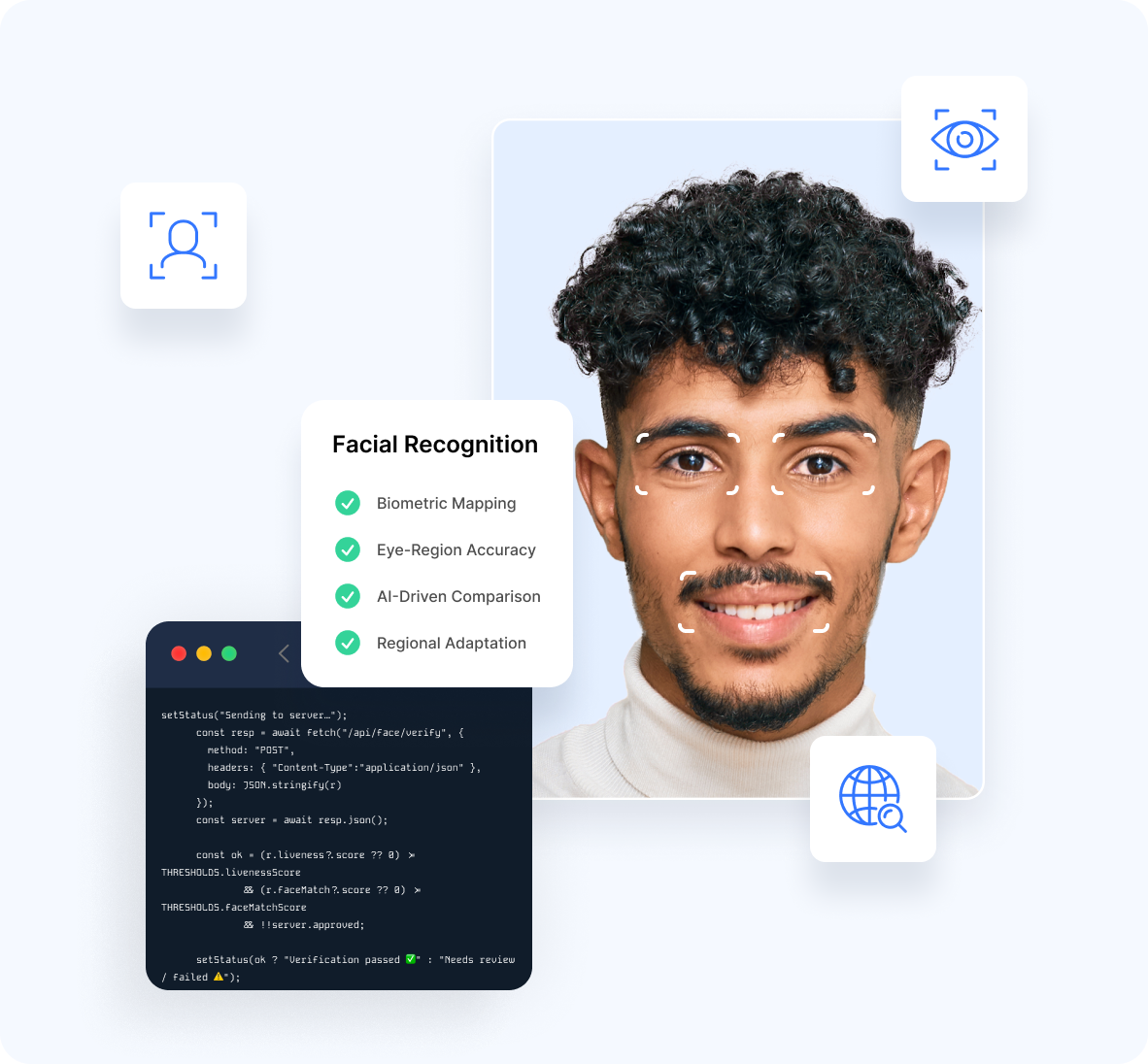
Our biometric system extracts and maps unique facial characteristics with exceptional accuracy:
- Facial Feature Extraction
Analyzes key facial landmarks to create unique biometric templates
- Periocular Recognition
Specialized technology focuses on the eye region for identification even when parts of the face are obscured - Template Matching & Scoring
Compares extracted templates against reference images with optimized machine learning algorithms
Comprehensive Liveness Detection
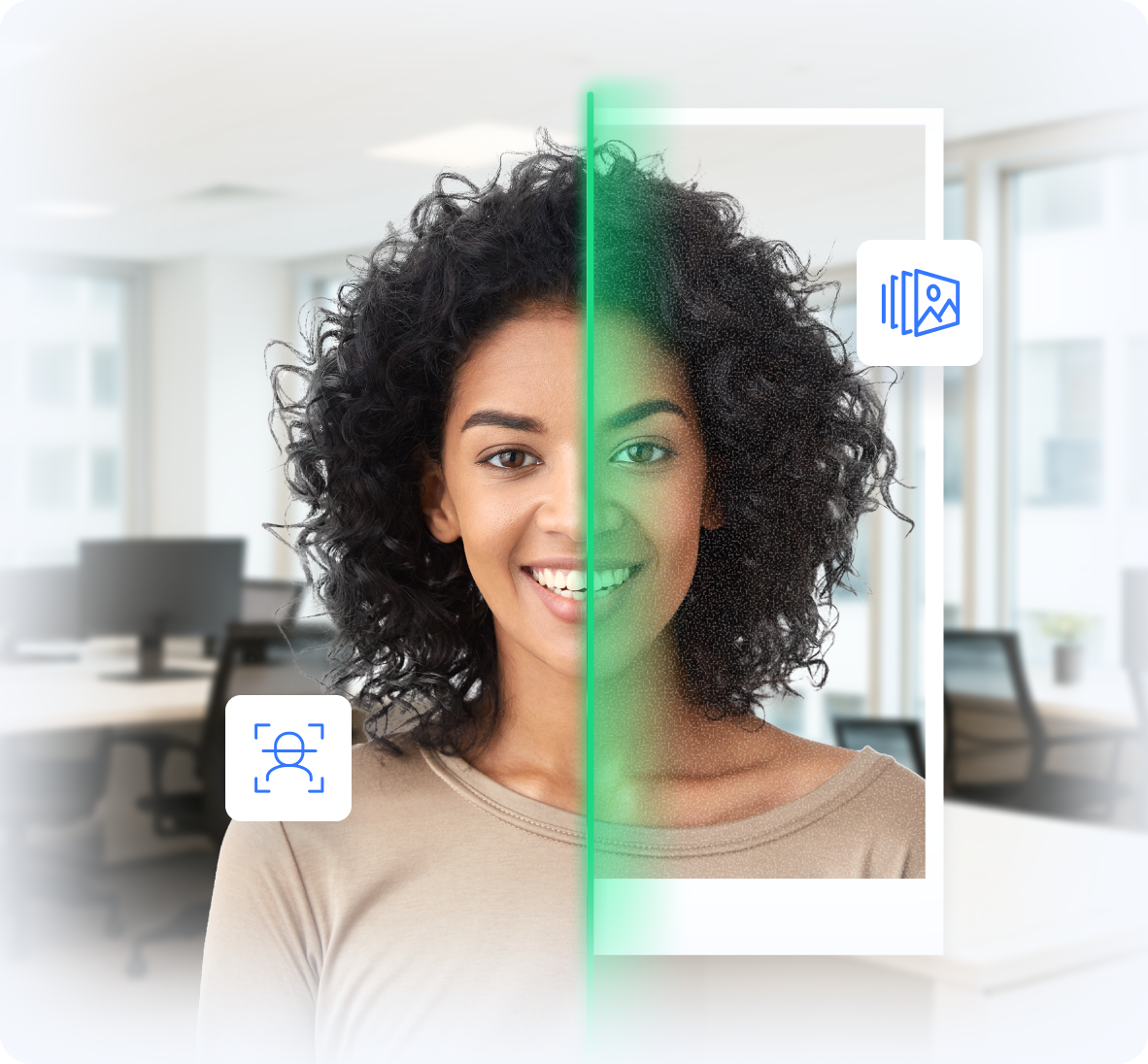
Our multi-layered approach ensures that only real, present individuals can verify their identity:
- Passive Liveness Mode
Verify identity without requesting any user action, reducing friction in the onboarding process
- Active Liveness Option
Request specific movements like head turns or blinks for enhanced security - Patented Presentation Attack Detection (PAD)
ISO 30107-3 compliant technology detects spoofing attempts
Anti-Spoofing Protection
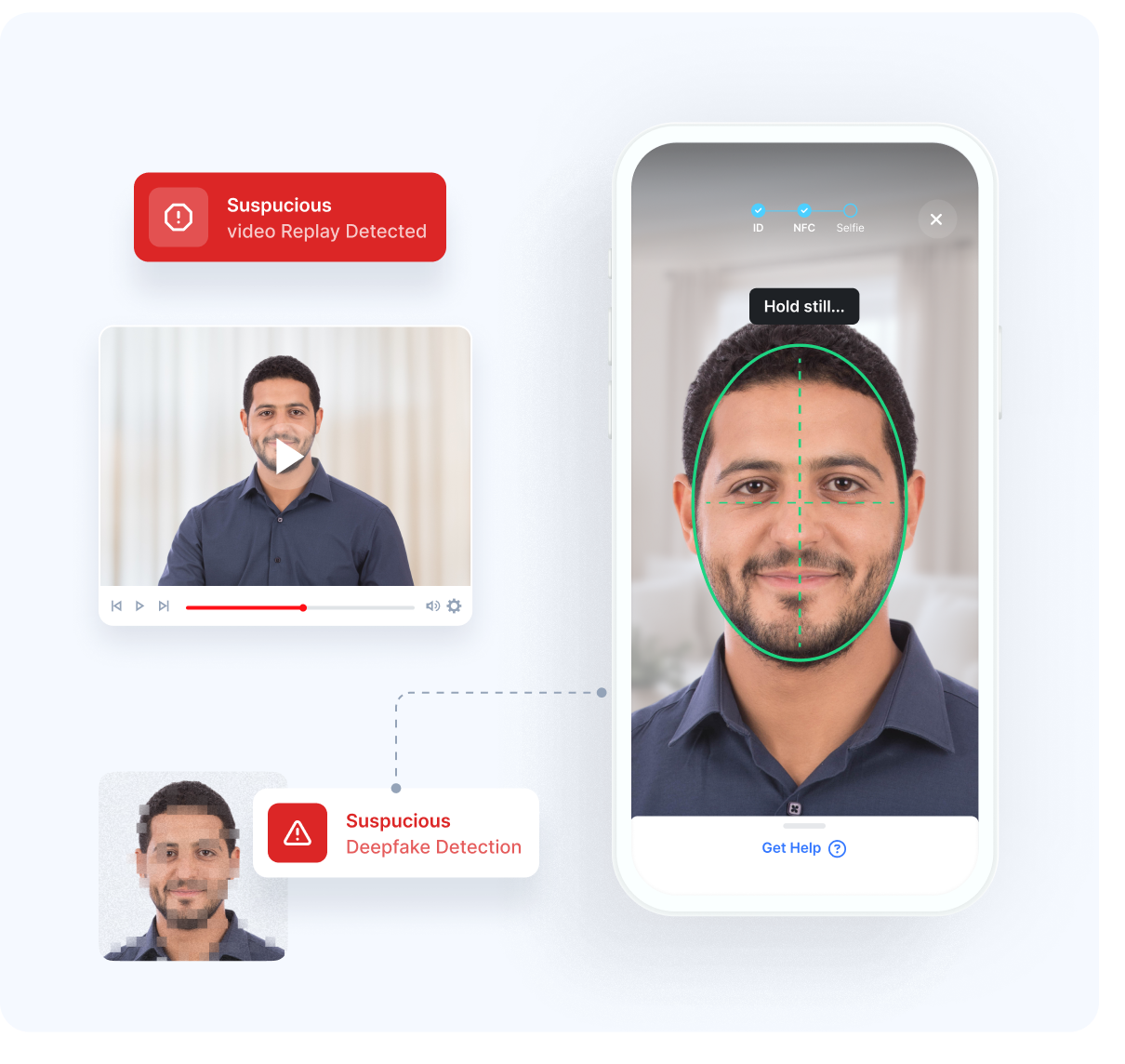
Our system effectively counters sophisticated fraud attempts:
-
1
Presentation Attack Defense
Detects printed photos, lifelike masks, and video replays
-
2
Image Injection Protection
-
3
Deep Fake Detection

Verification Modes
Support for both 1:1 matching (verification) and 1
matching (identification)

Multi-Accounting Prevention
1:N face search to prevent duplicate accounts and fraud

Authentication Applications
Supports passwordless login, transaction authorization, and account recovery

Flexible Deployment
Available via mobile SDK, web SDK, and API integration
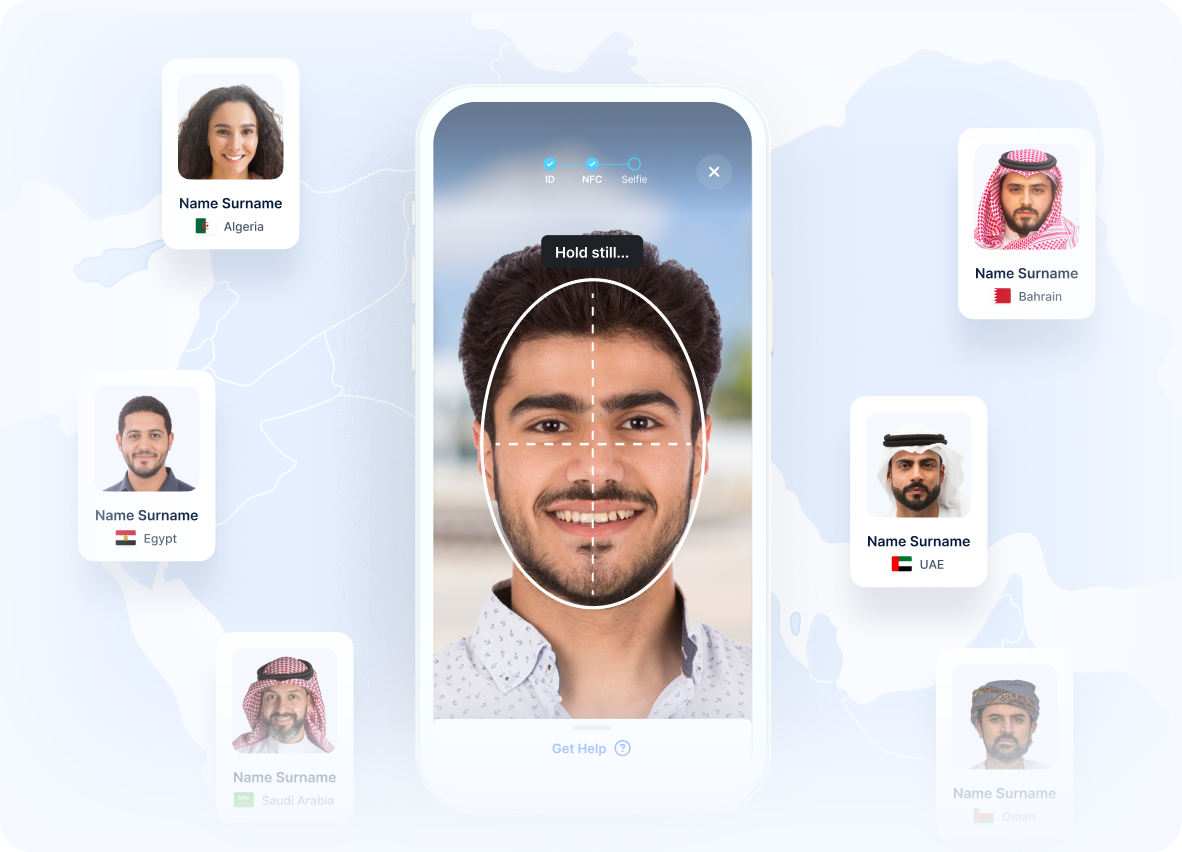
MEA-Focused Innovation
Our facial identity recognition technology is specifically designed for Middle Eastern and African users:
- Unbiased Recognition
Algorithms designed to be invariant to race and geography
- Regional Testing
Extensively tested across diverse regional populations - Cultural Sensitivity
Designed with awareness of regional norms and preferences
 Advantage
Frequently Asked Questions
Which industries can benefit from face verification and liveness detection?
Face verification and liveness detection are useful for any industry that needs secure digital onboarding and strong fraud protection. This includes banks, fintech and BNPL companies, telecom providers, crypto platforms, and money remittance services. With uqudo, these businesses can verify real users remotely while staying compliant with
KYC and AML regulations.
What are the key benefits of facial recognition for businesses?
Facial recognition helps businesses reduce identity fraud, onboard customers faster and deliver a smoother customer experience. uqudo’s solution provides quick and accurate verification, minimizes manual checks, supports KYC and AML compliance, and creates a secure digital journey that builds trust and supports long-term growth.
Who owns and controls the face verification data collected during verification?
uqudo acts only as a secure verification provider. The ownership and control of facial data remain with the client. uqudo processes the data strictly for verification purposes,
ensuring it is encrypted, securely handled, and compliant with all relevant data protection and privacy laws.
How does uqudo detect deepfakes and AI-generated identity fraud?
uqudo uses advanced liveness detection combined with AI-driven facial analysis to identify presentation attacks, spoofing attempts, and synthetic identities. The technology verifies that the face belongs to a real, live person and not a deepfake, video replay, or AI-generated image.
What industries commonly use liveness checks?
Liveness checks are widely used in industries such as banking, fintech, BNPL, telecom, crypto platforms, remittance services, and exchanges. These sectors depend on liveness detection to stop impersonation, account takeovers, and identity fraud during remote onboarding.
Does the face verification work in low-light or poor environmental conditions?
Yes. uqudo’s face verification works reliably even in low-light or difficult environments. The system checks image quality in real time and guides users to capture better images
when needed. This helps reduce errors while maintaining strong security and compliance standards.
How fast is the face verification and matching process?
uqudo’s face verification and matching process is near real-time, delivering results within seconds. This allows businesses to onboard customers quickly without compromising on security or accuracy.
How does uqudo ensure highly accurate face matching for users?
uqudo’s facial recognition services use advanced AI and deep learning to extract unique facial features and perform precise matching against reference images. When combined with liveness detection, this ensures that only real, live users are verified, reducing fraud and improving overall KYC accuracy.
Can facial verification be integrated into mobile apps or existing systems?
Yes. uqudo’s face verification and liveness detection can be easily integrated into mobile apps or existing digital systems using SDKs and APIs. This allows businesses to add secure biometric authentication directly into their current onboarding or login flows.
